














Hotel Casa Fuster *****
History
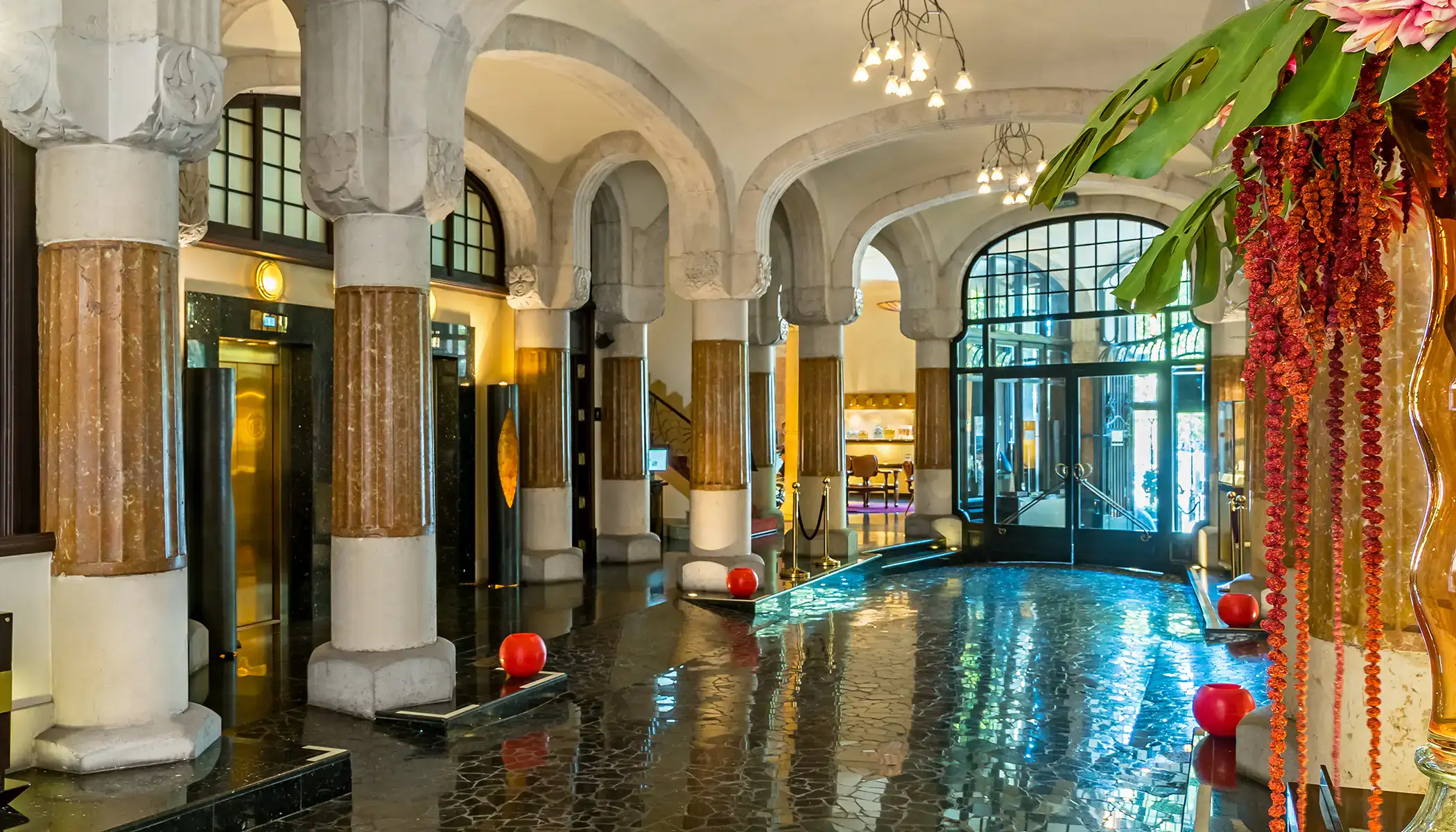
The house was a gift from Mr Fuster to his wife, with the added intention of beautifying the city of Barcelona. It was the architect’s final work in the Catalan capital and, at the time, it was considered the most expensive house in the city due to the materials used, including high-quality marble.
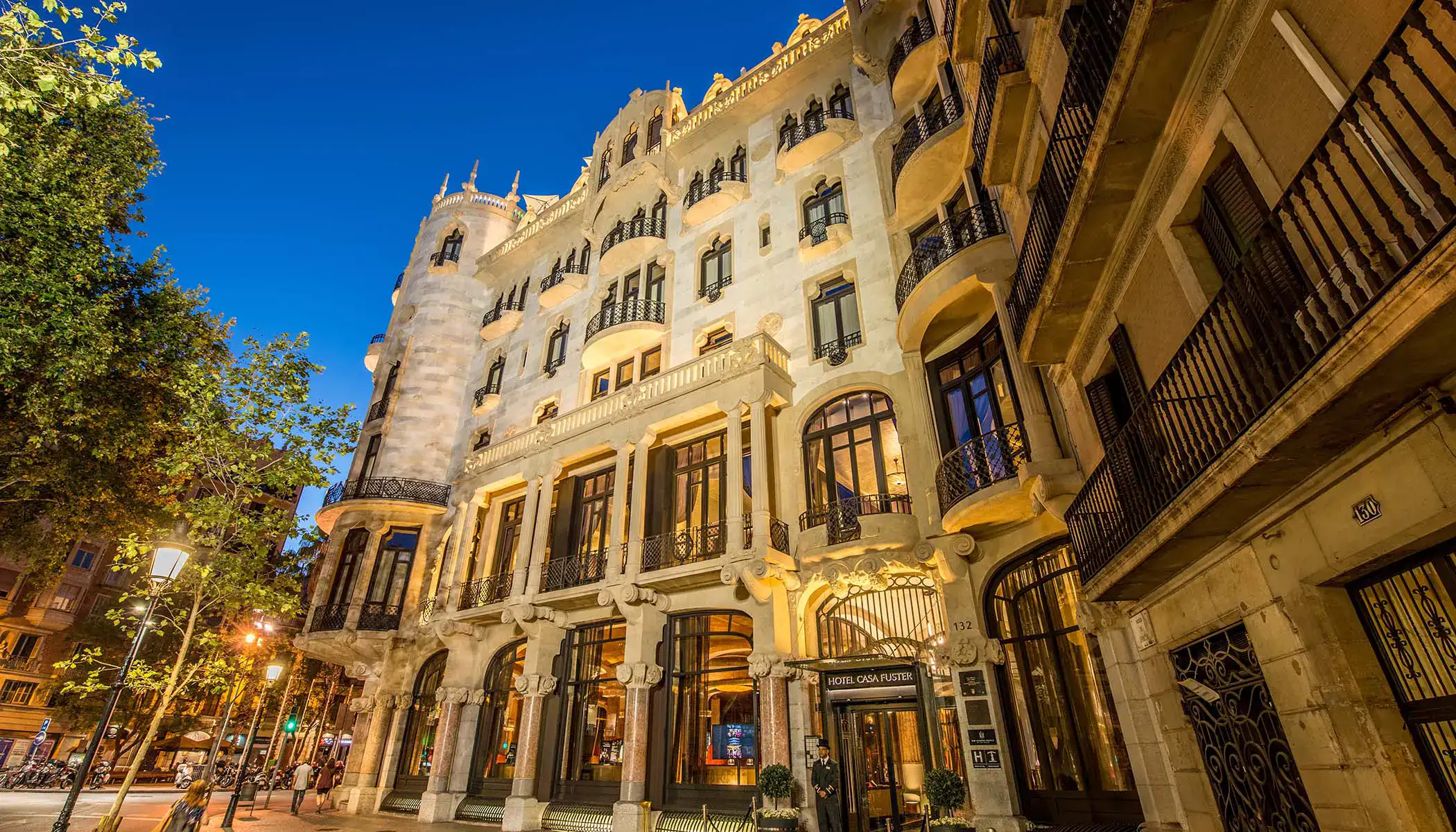
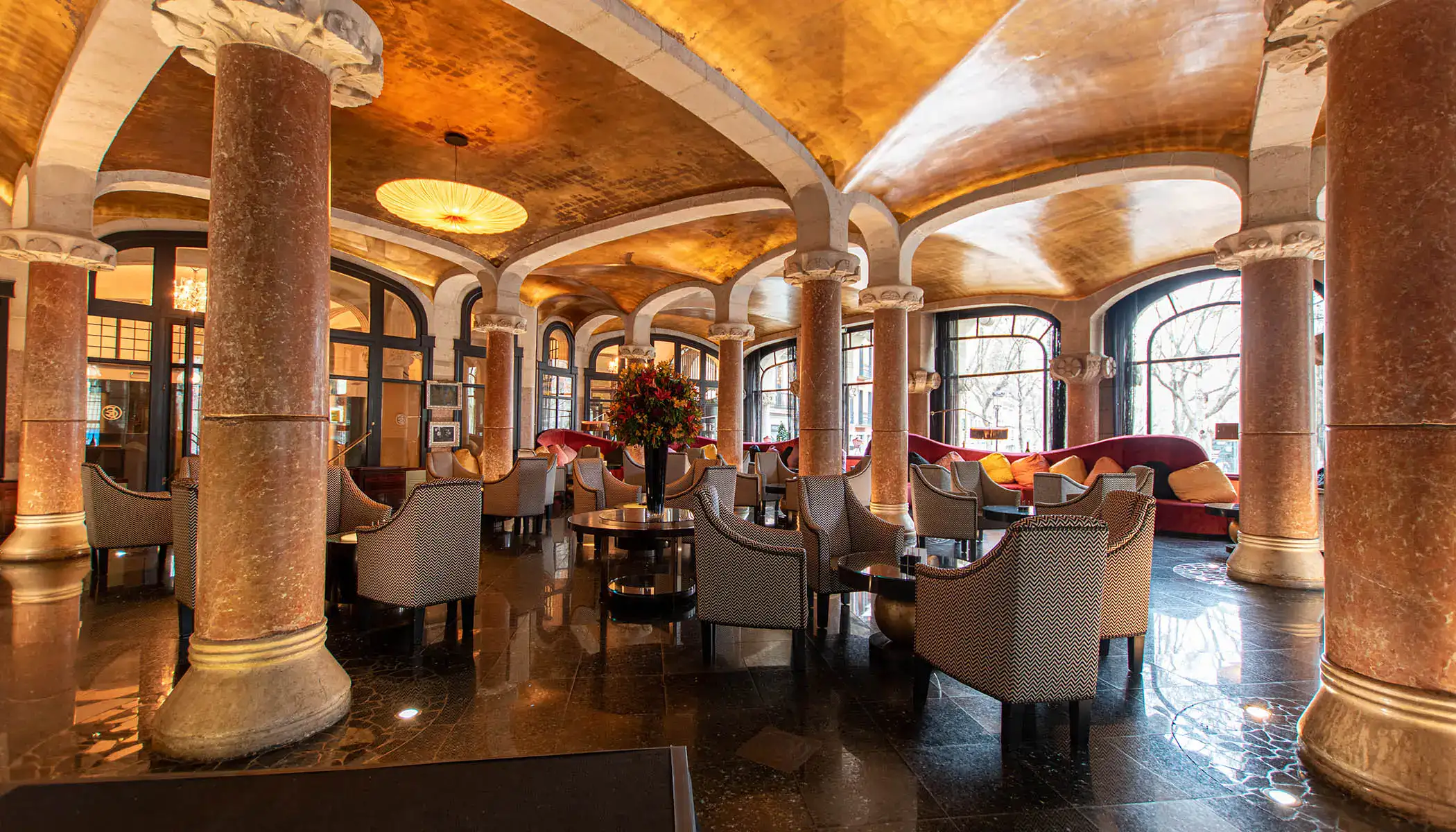
Casa Fuster not only represents the culmination of Domènech i Montaner’s work; it is also the building that, with the utmost dignity, crowns and closes the Eixample district, and stands as a symbol of the most prosperous and splendid period of Barcelona in the last century.
01.
Mr Mariano Fuster i Fuster, a gentleman of Mallorcan high society, met Miss Consuelo Fabra i Puig in Barcelona, daughter of the Marquis of Alella.
02.
Mr Fuster wished to gift his wife a house and decided to buy the building located at 132 Passeig de Gràcia. In 1905 they obtained the necessary permits to demolish it and construct a spectacular house in full view of Consuelo Fabra i Puig and the city of Barcelona.
03.
The ambitious project was entrusted to architect Lluís Domènech i Montaner, who designed and built the house under the supervision of Consuelo Fabra i Puig. Mariano Fuster put the house in his wife’s name and dedicated a rose window to her, which can be found on the Carrer de Jesús façade bearing the initials CF.
04.
Mr. Domènech i Montaner, a Modernist architect of international renown and author of works such as the famous “Palau de la Música Catalana” (declared a World Heritage Site by UNESCO), built Casa Fuster with three façades of great impact, particularly due to their intricate details and expressiveness.
05.
Construction began in 1908, and in 1911 the Fuster i Fabra family moved into the planta noble (noble floor). In 1911, “Casa Fuster” was considered the most expensive house in the city due to the materials used in its construction, most notably high-quality marble. The house’s façade was the first in the city to be made of white marble.
06.
07.
From that point onwards, the area now known as Café Vienés served various functions: small businesses such as a barber’s and a grocery shop. What is now the Domènech i Montaner Room became, in the mid-1950s, a dance hall named “El Danubio Azul”.
08.
In 1962, the company ENHER (an electricity company) bought the house with the intention of demolishing it to build a skyscraper. Barcelona society was totally opposed, and thanks to numerous protests and press articles, this catastrophe was avoided. They succeeded in ensuring that ENHER not only refrained from demolishing the house but also committed to restoring the building. These basic restorations were undertaken between 1962 and 1974, with the final one in 1995.
09.
Contact
Hotel Casa Fuster *****
Share your experience